





When It’s Time to Replace Air Compressor Air End: 7 Warning Signs
This guide covers the warning signs, the lifespan benchmarks, and the economic rules of thumb that turn that decision from guesswork into a defensible engineering call.

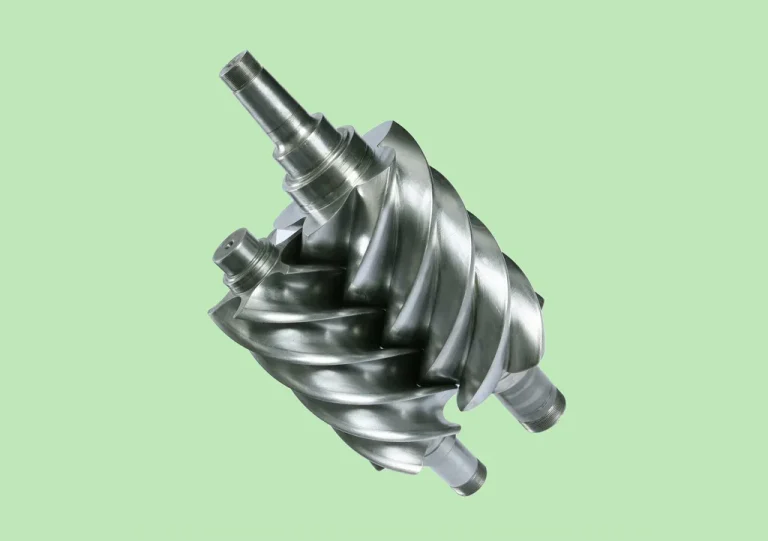
The air end — also called the air compressor air end or compressor element — is the heart of any rotary screw air compressor. It is where the actual compression happens: two precision-machined rotors mesh inside a sealed housing, drawing in atmospheric air and squeezing it to the pressure your facility needs. When the air end begins to wear, every downstream metric suffers: air output drops, energy consumption rises, and the risk of an unplanned shutdown climbs.
Knowing when to replace the air compressor air end — rather than rebuild, repair, or ignore it — is one of the highest-stakes decisions a maintenance or plant manager will face. This guide covers the warning signs, the lifespan benchmarks, and the economic rules of thumb that turn that decision from guesswork into a defensible engineering call.
What the Air End Does and Why It Wears
The air compressor air end is not a passive component. It operates under continuous load, often in demanding conditions: hot, humid, or dusty environments accelerate the degradation of rotor coatings, bearing surfaces, and internal clearances. Over thousands of operating hours, bearings fatigue, seals harden, and the fine tolerances between rotors and housing begin to widen. The result is a slow but measurable decline in volumetric efficiency, thermal performance, and reliability.
Because the air end is the single most expensive component in a rotary screw compressor, ignoring its deterioration is never neutral. A worn air end consumes more energy to produce the same compressed air, and it moves the compressor closer to catastrophic failure — seized rotors, cracked castings, or oil contamination of the downstream air supply.
7 Warning Signs It’s Time to Replace the Air Compressor Air End
The following indicators, drawn from manufacturer guidance and service industry practice, signal that the air end has moved beyond normal wear and into the zone where replacement becomes the rational choice.
- Declining Air Pressure or Flow Output
If your compressor takes noticeably longer to build pressure, cycles more frequently, or simply cannot maintain the rated flow at the required discharge pressure, the rotors or seals are no longer creating an effective compression seal. Gradual CFM loss is one of the earliest measurable signs of air end degradation. - Unusual Noise — Grinding, Knocking, or Whining
Healthy screw rotors produce a smooth, consistent hum. Grinding suggests rotor-to-housing contact. Knocking points to bearing damage or timing gear wear. A high-pitched whine often originates from axial bearing wear, while low-frequency rumbling typically indicates radial bearing damage. Any new or escalating noise pattern warrants immediate inspection. - Higher Operating or Discharge Temperatures
A worn air end generates more internal friction, and worn bearings produce more heat. Rising discharge temperatures — especially when coolers are clean and oil flow is adequate — are among the earliest indicators of bearing wear or internal clearance changes. - Increased Vibration
Elevated vibration often means misaligned rotors, bearing failure, or imbalance inside the air end. Vibration analysis can detect bearing degradation long before audible noise appears, making it a valuable predictive tool. - Metal Particles in the Oil
Oil analysis is one of the most reliable early-warning systems available. Metal fragments in the lubricant almost always indicate internal wear — bearings, rotor surfaces, or timing gears shedding material into the oil circuit. - Recurring Oil Leaks and Seal Failures
A single seal replacement is routine maintenance. But repeated shaft seal failures, oil seeps around the air end housing, or persistent oil consumption without an external leak point to internal tolerance degradation that new seals cannot correct. - Chronic Overheating Shutdowns
If thermal trips recur even after cleaning coolers, replacing thermostatic valves, and refreshing the oil, the root cause is likely internal: rotor friction or housing distortion generating heat faster than the cooling system can reject it. At this stage, soft-part repairs are temporary patches over a structural problem.
Air End Lifespan: What the Hours Tell You
Air end lifespan varies by design, operating speed, and maintenance quality, but industry benchmarks provide useful reference points. Single-stage rotary screw air ends typically reach their design limit between 35,000 and 45,000 operating hours. Two-stage air ends — which divide compression across two rotor sets — can achieve 100,000 hours or more under disciplined maintenance. General rebuild recommendations for rotary screw airends fall in the 50,000-to-100,000-hour range depending on duty cycle and environment.
A practical rule: if your air end has accumulated more than 60,000 hours and begins showing two or more of the warning signs above, the economics almost always favor replacement over continued repair.
Repair or Replace? Applying the 50% Rule
The compressed air industry has converged on a decision heuristic known as the 50% rule: if the cost of repairing or replacing the air end exceeds 50% of the price of a new comparable compressor, replacement of the entire unit is generally the more economical path. Some organizations, particularly those where reliability is critical and backup capacity is limited, use a 65% threshold instead.
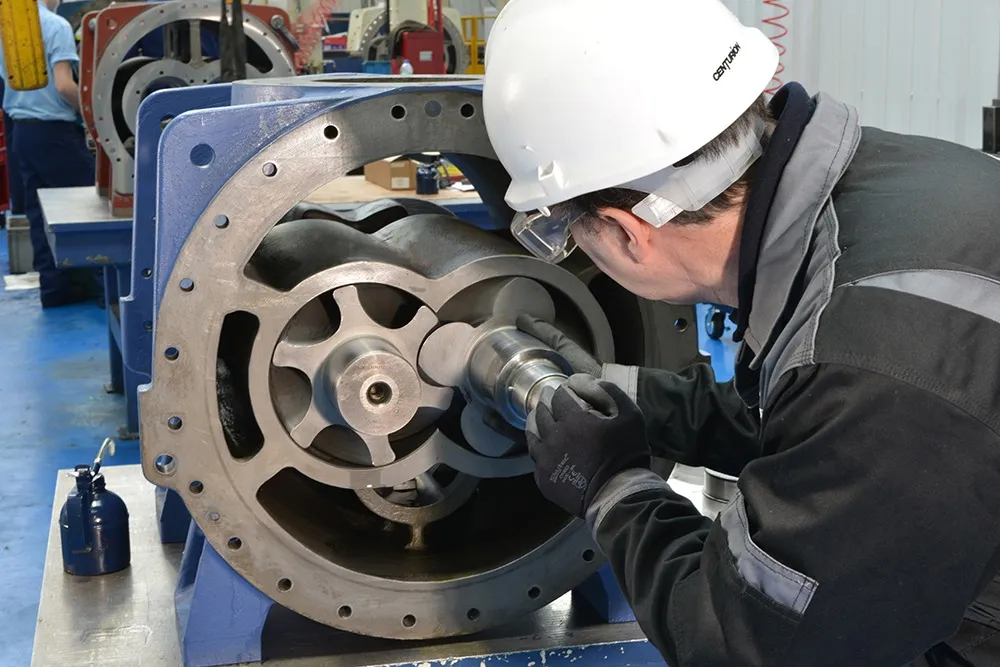
A repair — replacing bearings, seals, timing gears, and gaskets while retaining the original rotors and housing — typically costs 40% to 60% less than buying a new air end, and can extend service life by another 30,000 to 50,000 hours. However, a rebuild is only appropriate when the rotors themselves remain within tolerance and the failure is isolated to wear components. If rotor scoring, housing distortion, or coating failure is present, replacement is the only reliable option.
Protecting Your Investment: Maintenance That Extends Air End Life
The most cost-effective air end replacement is the one you never have to make. Preventive maintenance directly extends air end service life by controlling the three primary wear accelerators: heat, contamination, and lubrication breakdown.
Follow the oil change interval without exception. Degraded lubricant loses its ability to cool and seal, allowing metal-to-metal contact inside the air end. Oil filters should be changed, and strainers kept clean, at every recommended interval.
Replace air intake filters on schedule. A clogged intake filter creates pressure starvation that promotes rotor scuffing and accelerates bearing wear. In dusty environments, shorten the replacement interval accordingly.
Monitor temperatures and vibration trends, not just alarm thresholds. A discharge temperature that has drifted upward by 5–8°C over six months is telling you something, even if it has not yet tripped a shutdown. The same is true for vibration signatures. Trend data catches degradation before it becomes failure.
Use the correct lubricant and avoid mixing brands. Manufacturer-recommended oil is formulated for the specific rotor coating, bearing clearances, and thermal profile of your air end. Substituting a generic lubricant may save money at the point of purchase and cost far more at the point of rebuild.
When Replacement Becomes the Only Sensible Option
Beyond the 50% cost threshold, several conditions make air end replacement the clear choice rather than a rebuild. Recurring failures of the same component — for example, repeated shaft seal leaks despite proper installation — indicate permanent structural degradation that soft-part repairs cannot reverse. Oil-free air ends present a special case: their Teflon rotor coatings cannot be reliably restored in the field, so replacement with an OEM air end is the standard path when coating wear is detected. And if the air end has failed catastrophically — seized rotors, cracked housing, or metal debris circulating through the oil system — replacement is not a choice but a necessity.
Conclusion: Decide with Data, Not with Hope
The question of when to replace an air compressor air end is ultimately a financial and operational question, not merely a technical one. The warning signs are rarely subtle: declining output, rising temperatures, new noises, metal in the oil. What makes the decision difficult is the emotional weight of writing off a component that may still run — poorly, expensively, and unpredictably — for another few thousand hours.
The disciplined approach is to track hours, monitor trends, and apply the 50% rule without sentiment. If the rebuild cost approaches half the price of a new compressor, and the unit is already past its design-hour midpoint, replacement is not giving up on the machine. It is protecting the reliability of the compressed air system that the rest of your operation depends on.
For facilities that cannot tolerate any interruption in air supply, plan the replacement during a scheduled maintenance window and arrange a rental compressor to cover the transition. The air end is the heart of the compressor — and like any heart, it deserves to be replaced on evidence, not on emergency.
Related Products
-
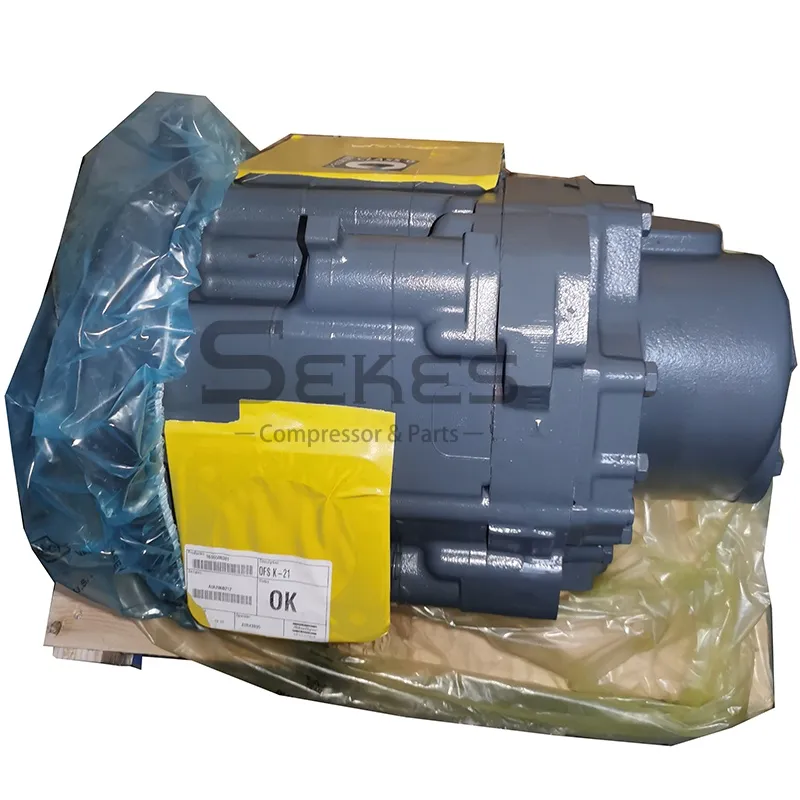
1616580382: ATLAS COPCO OFS K-22 ELEMENT COMPR
$20,000.00 -
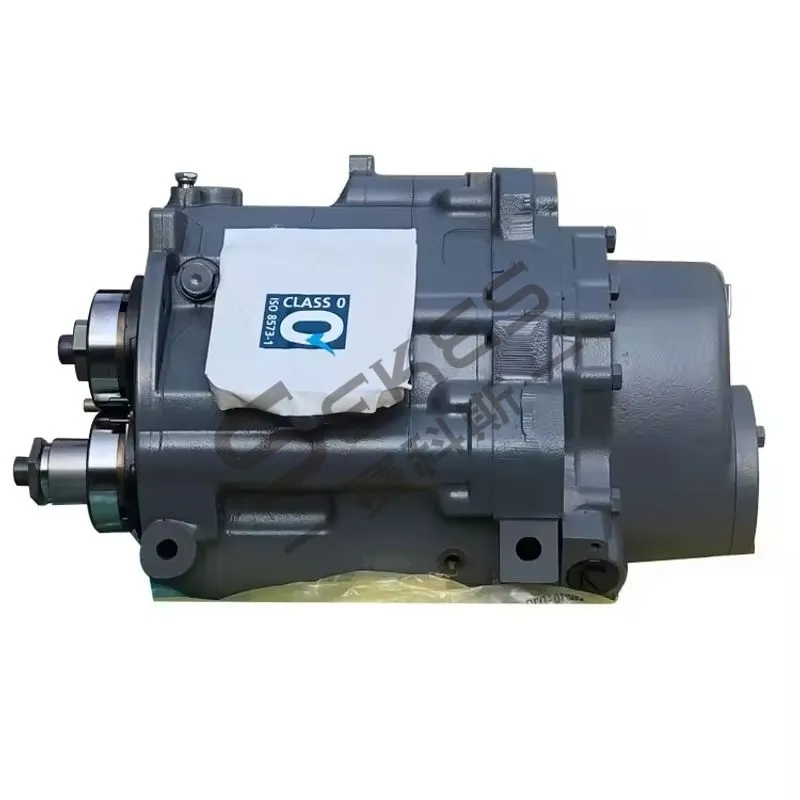
1616580383: O.F.S. K-23 | ATLAS COPCO AIR END
$10,000.00 -
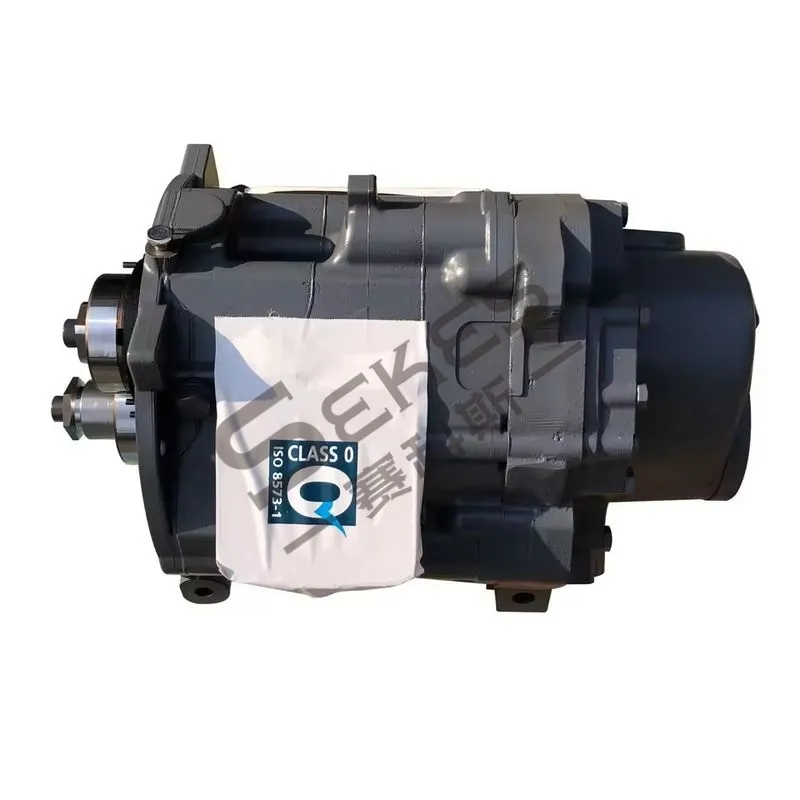
1616580388: O.F.S. K-28 | ATLAS COPCO AIR END
$10,000.00 -
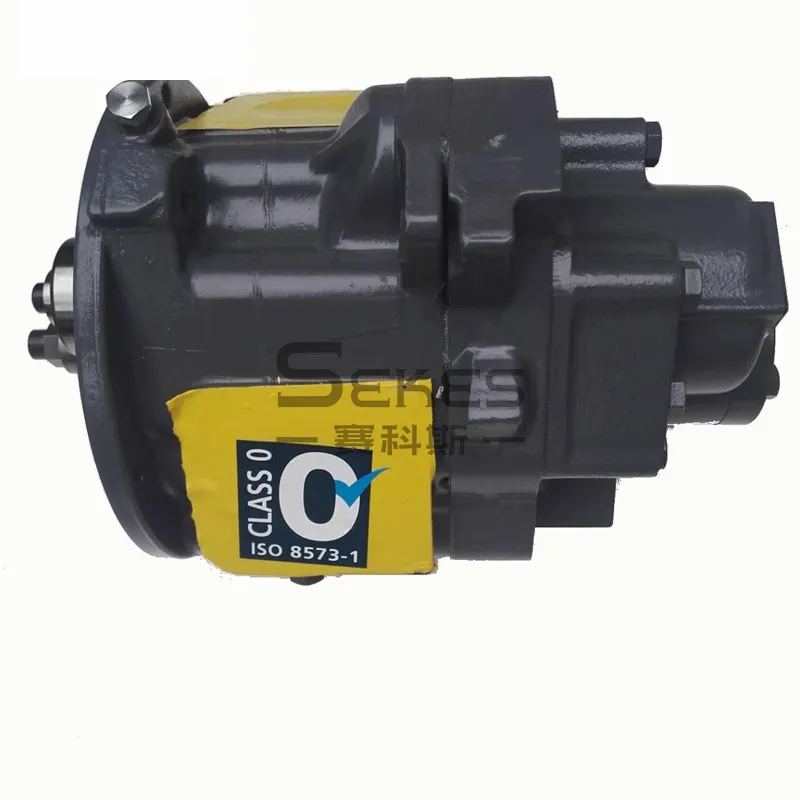
1616585181: O.F.S. G-21 | ATLAS COPCO AIR END
$21,000.00